





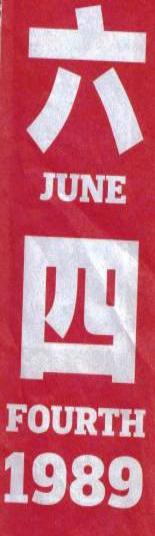
TIANANMEN ON THE 20th ANNIVERSARY: LEST WE FORGET
By Uli Schmetzer
Twenty years ago China’s ‘Red Emperor’ Deng Xiaoping decided that feeding his
people and offering them material incentives was more important than giving them a say in how to
run the country. Deng shrewdly calculated China’s rise to global power status would not be
impeded by a bloody crack-down against those clamoring for a liberated political system that, so
he felt, would plunge the country into years of vicious in-fighting and provincial separatism.
Deng correctly predicted the greed of foreign entrepreneurs and corporations would
slosh through the blood of any massacre in their rush to feed on China’s cheap
labor market and its potential consumerism. He knew profits not human rights ruled the
world.
After all he was a founding member of Maoist-Marxist-Leninist communism, a credo that had
already sacrificed millions of people to government by a new class of proletarian mandarins. In
China’s sanguine history another few hundred, or a few thousand, barely merited a footnote
labeled ‘The Tiananmen Incident’ - which we in the West wrongly called ‘The Tiananmen
Massacre.’ (The killings occurred outside the Square which means we should have called it â
€˜The Beijing Massacre’)
As foreign correspondent I witnessed the bloodletting in Beijing in those turbulent days and was
shocked how quickly, how efficiently and brutally order was restored. The corpses disappeared,
the survivors kept quiet, a country of 1.2 billion people went about its business as if no more then
a hiccup had interrupted its daily pace.
More startling, between June 1989 and 1996, when I left China, the country had metamorphosed
from a primitive global backwater into an economic power-house. By the time I left, the Avenue of
Eternal Peace had turned from a bicycle freeway into a traffic-jammed automobile boulevard and
the ancient courtyard houses in narrow hutongs had sprouted into modern skyscrapers.
By Uli Schmetzer
Twenty years ago China’s ‘Red Emperor’ Deng Xiaoping decided that feeding his
people and offering them material incentives was more important than giving them a say in how to
run the country. Deng shrewdly calculated China’s rise to global power status would not be
impeded by a bloody crack-down against those clamoring for a liberated political system that, so
he felt, would plunge the country into years of vicious in-fighting and provincial separatism.
Deng correctly predicted the greed of foreign entrepreneurs and corporations would
slosh through the blood of any massacre in their rush to feed on China’s cheap
labor market and its potential consumerism. He knew profits not human rights ruled the
world.
After all he was a founding member of Maoist-Marxist-Leninist communism, a credo that had
already sacrificed millions of people to government by a new class of proletarian mandarins. In
China’s sanguine history another few hundred, or a few thousand, barely merited a footnote
labeled ‘The Tiananmen Incident’ - which we in the West wrongly called ‘The Tiananmen
Massacre.’ (The killings occurred outside the Square which means we should have called it â
€˜The Beijing Massacre’)
As foreign correspondent I witnessed the bloodletting in Beijing in those turbulent days and was
shocked how quickly, how efficiently and brutally order was restored. The corpses disappeared,
the survivors kept quiet, a country of 1.2 billion people went about its business as if no more then
a hiccup had interrupted its daily pace.
More startling, between June 1989 and 1996, when I left China, the country had metamorphosed
from a primitive global backwater into an economic power-house. By the time I left, the Avenue of
Eternal Peace had turned from a bicycle freeway into a traffic-jammed automobile boulevard and
the ancient courtyard houses in narrow hutongs had sprouted into modern skyscrapers.
China was booming and the memory of Tiananmen was kept alive only by foreign publications exhuming its horrors on
anniversary dates while forever searching for that handful of die-hard Chinese dissidents who kept alive the dream of a multi-
party future and a more just judiciary, a dream unlikely to become reality while China’s growth rate continues to gallop
forward.
With its popularity high the communist party sees no reason to curb its powers or make concessions – yet.
Deng knew his own positive image as the father of China’s Open Door policy would be tarnished by Tiananmen and he
would be reclassified abroad as an ogre. Still he must have known a more sober future might still reclassify him as the
enlightened statesman who engineered China’s century old ambition for recognition as a global leader.
The ‘Red Emperor’ also realized while western powers lambasted his crack-down the Chinese tycoons in the Chinese
Diaspora would view it as a positive sign the communist government had a solid grip on power, determined to stay, so their
investments were safe.
Sadly, he was right again.
Following the June 4, 1989 massacre the Chinese in the South-East Asian Diaspora invested over 80 per cent of
the foreign funds that allowed Deng’s China to make the most amazing development leap in history.
Economic progress has virtually silenced the call for parallel political progress.
That the dream of freedom is not dead, nor will ever die, speaks positive for human nature and its periodic endeavor to
promote a more humane system. When 303 Chinese intellectuals signed the Charter 08 manifesto last November
clamoring for political changes, more transparency in government and an end to rampant nepotism and corruption they
echoed the very demands made twenty years earlier by the students on Tiananmen Square.
And it is no accident that Zhao Zhiyang’s memoirs found their way to the West and into cyberspace over recent
weeks. The former Number Two in the Chinese hierarchy, a man who loved elegant western clothing and the game of golf,
was purged by Deng’s order when he supported the students’ call for more freedom. He spent the rest of his life
under house arrest until he died in 2005 (though in deference to his western vice he was permitted to play the odd game of
golf).
Although a poll by the Washington-based Pew Research Center found 86 per cent of Chinese are satisfied with their
country’s direction the government takes no risks, even 20 years after the protest. It ordered nation-wide university
examinations on this year’s anniversary, apparently to keep students in their classrooms. Even though China’s
young generation has been dubbed ‘the stupid generation raised on Coca-Cola and western play stations’ the
government this year ‘invited’ known dissidents like Bao Tong (Zhao’s aide) to take ‘a holiday out of town.’
Tiananmen must not be and will not be forgotten, just as similar government-sanctioned massacres elsewhere
must never be shelved for oblivion.
Of course there are those who will argue the blood-letting in Beijing in 1989 saved China from far worse turmoil and our
Western world from a human tsunami of Chinese who would have fled the country to seek their fortune in the developed
world, mainly the United States, if border controls had broken down.
Chinese officials estimated 100 million Chinese would have left the country if the protest movement had
caused the collapse of the communist regime and opened the frontiers. At the same time provincial strong men
would have turned into modern ‘warlords, roving rabble and young xenophobic radicals would have settled
old scores with the newly affluent and with foreigners as they did during the Cultural Revolution.
The estimate of a 100 million heading abroad makes me recall Deng’s first visit as ‘emperor’ to the
USA. Deng was confronted by Jimmy Carter with the request to allow more of his citizen to go abroad. The
response of the little man with the elfin smile was instant: “Mister President,� he said: “How many
million do you want.� Carter never broached the subject again.
Beijing in 1989 was straining under some two to three million rural workers who had flocked to the capital as laborers for
the building boom and in search of a better livelihood. These migrant workers slept in parks and partially built edifices and
had joined the street protests together with those who had been laid off when Deng’s economic house-cleaning closed
down loss-making state enterprises. Fear this marginalized mass might run amok and the prospect of possible civil war
prompted tens of thousands of foreigners to be evacuated from China.
Those who stayed behind, like myself, were never quite sure any moment a gang of xenophobic radicals would arrest us
and subject us to an infamous ‘struggle session,’ beating and parading us through the city as members of the
capitalist conspiracy that had caused the turmoil.
Instead China flourished and the subsequent economic boom after the crack-down made the outside world
less attractive to millions of Chinese who had dreamt for years about opportunities and luxuries abroad. Now
they could find them at home.
In the end one can only hope that in China, like elsewhere, the striving for justice and liberty will never be
sacrificed to consumerism because if that happens we will all end up slaves.
(Uli Schmetzer was the Chicago Tribune’s Correspondent in China from 1988 to 1996. His book ‘Times of Terror –
Notebooks of a Foreign Correspondent’ includes a chapter on Tiananmen and his assignment in China and South
East Asia. The book is available from Amazon.com at the end of June.)
anniversary dates while forever searching for that handful of die-hard Chinese dissidents who kept alive the dream of a multi-
party future and a more just judiciary, a dream unlikely to become reality while China’s growth rate continues to gallop
forward.
With its popularity high the communist party sees no reason to curb its powers or make concessions – yet.
Deng knew his own positive image as the father of China’s Open Door policy would be tarnished by Tiananmen and he
would be reclassified abroad as an ogre. Still he must have known a more sober future might still reclassify him as the
enlightened statesman who engineered China’s century old ambition for recognition as a global leader.
The ‘Red Emperor’ also realized while western powers lambasted his crack-down the Chinese tycoons in the Chinese
Diaspora would view it as a positive sign the communist government had a solid grip on power, determined to stay, so their
investments were safe.
Sadly, he was right again.
Following the June 4, 1989 massacre the Chinese in the South-East Asian Diaspora invested over 80 per cent of
the foreign funds that allowed Deng’s China to make the most amazing development leap in history.
Economic progress has virtually silenced the call for parallel political progress.
That the dream of freedom is not dead, nor will ever die, speaks positive for human nature and its periodic endeavor to
promote a more humane system. When 303 Chinese intellectuals signed the Charter 08 manifesto last November
clamoring for political changes, more transparency in government and an end to rampant nepotism and corruption they
echoed the very demands made twenty years earlier by the students on Tiananmen Square.
And it is no accident that Zhao Zhiyang’s memoirs found their way to the West and into cyberspace over recent
weeks. The former Number Two in the Chinese hierarchy, a man who loved elegant western clothing and the game of golf,
was purged by Deng’s order when he supported the students’ call for more freedom. He spent the rest of his life
under house arrest until he died in 2005 (though in deference to his western vice he was permitted to play the odd game of
golf).
Although a poll by the Washington-based Pew Research Center found 86 per cent of Chinese are satisfied with their
country’s direction the government takes no risks, even 20 years after the protest. It ordered nation-wide university
examinations on this year’s anniversary, apparently to keep students in their classrooms. Even though China’s
young generation has been dubbed ‘the stupid generation raised on Coca-Cola and western play stations’ the
government this year ‘invited’ known dissidents like Bao Tong (Zhao’s aide) to take ‘a holiday out of town.’
Tiananmen must not be and will not be forgotten, just as similar government-sanctioned massacres elsewhere
must never be shelved for oblivion.
Of course there are those who will argue the blood-letting in Beijing in 1989 saved China from far worse turmoil and our
Western world from a human tsunami of Chinese who would have fled the country to seek their fortune in the developed
world, mainly the United States, if border controls had broken down.
Chinese officials estimated 100 million Chinese would have left the country if the protest movement had
caused the collapse of the communist regime and opened the frontiers. At the same time provincial strong men
would have turned into modern ‘warlords, roving rabble and young xenophobic radicals would have settled
old scores with the newly affluent and with foreigners as they did during the Cultural Revolution.
The estimate of a 100 million heading abroad makes me recall Deng’s first visit as ‘emperor’ to the
USA. Deng was confronted by Jimmy Carter with the request to allow more of his citizen to go abroad. The
response of the little man with the elfin smile was instant: “Mister President,� he said: “How many
million do you want.� Carter never broached the subject again.
Beijing in 1989 was straining under some two to three million rural workers who had flocked to the capital as laborers for
the building boom and in search of a better livelihood. These migrant workers slept in parks and partially built edifices and
had joined the street protests together with those who had been laid off when Deng’s economic house-cleaning closed
down loss-making state enterprises. Fear this marginalized mass might run amok and the prospect of possible civil war
prompted tens of thousands of foreigners to be evacuated from China.
Those who stayed behind, like myself, were never quite sure any moment a gang of xenophobic radicals would arrest us
and subject us to an infamous ‘struggle session,’ beating and parading us through the city as members of the
capitalist conspiracy that had caused the turmoil.
Instead China flourished and the subsequent economic boom after the crack-down made the outside world
less attractive to millions of Chinese who had dreamt for years about opportunities and luxuries abroad. Now
they could find them at home.
In the end one can only hope that in China, like elsewhere, the striving for justice and liberty will never be
sacrificed to consumerism because if that happens we will all end up slaves.
(Uli Schmetzer was the Chicago Tribune’s Correspondent in China from 1988 to 1996. His book ‘Times of Terror –
Notebooks of a Foreign Correspondent’ includes a chapter on Tiananmen and his assignment in China and South
East Asia. The book is available from Amazon.com at the end of June.)